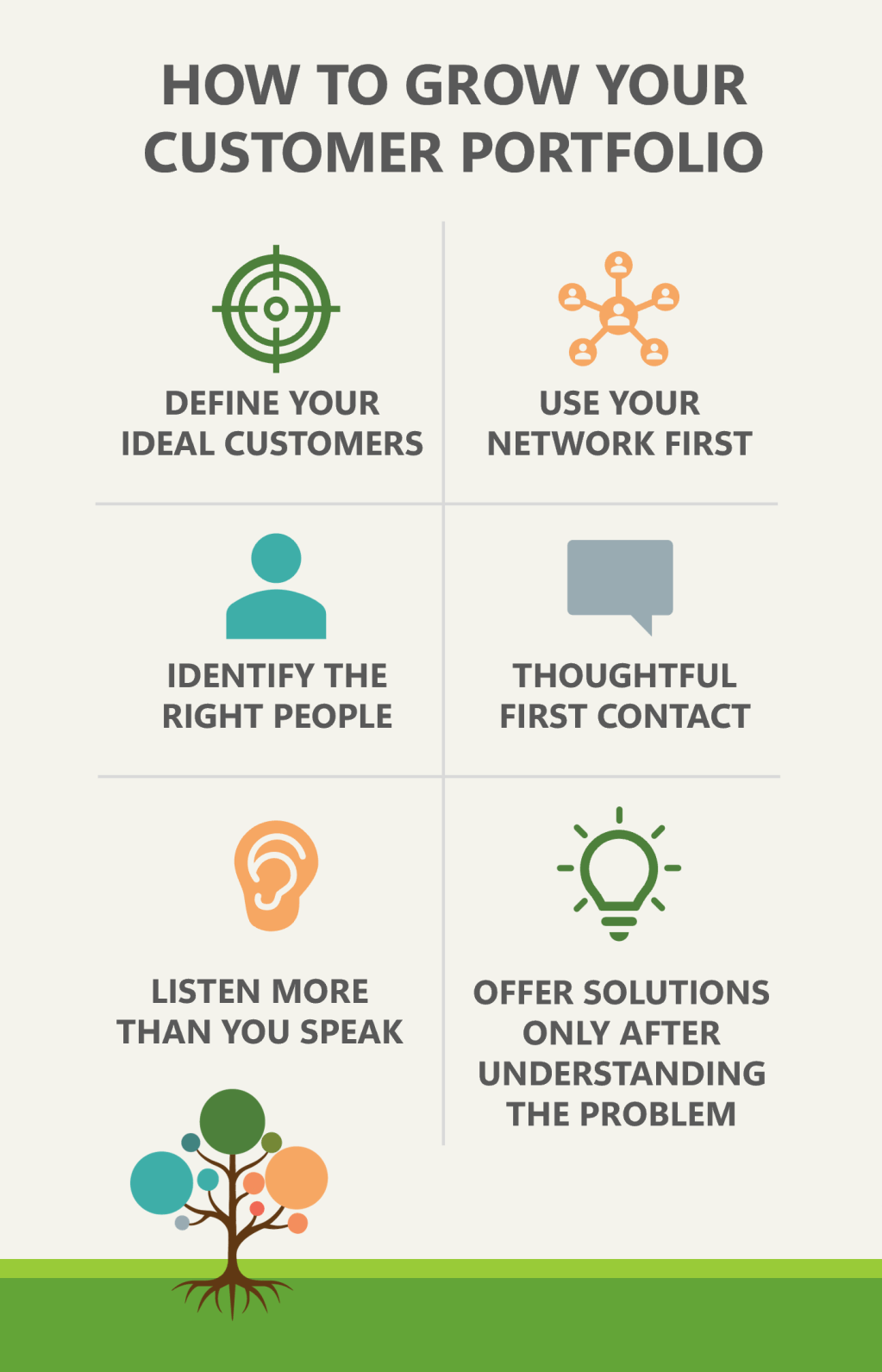
When businesses start up, they often have one or two key customers. This is a great way to test and develop a product, but relying on one or two loyal customers leaves your business exposed and limits your growth. Expanding your customer portfolio isn’t just a strategic priority, it’s a necessary requirement to growing any business, but finding new customers beyond your initial network can feel incredibly daunting. That first customer is often a contact that you know, or a lucky break, but growing a comprehensive customer portfolio takes time and effort.
This guide breaks down how to grow your customer base, and how to keep those new relationships strong once you’ve won them.
Identifying your target customers
As part of your business strategy, you need to identify your target customers. Is it a particular sector, size or geographical location? Within this you can then start to formulate a list of specific customer names. This can be done pretty effectively these days using AI, but another neat method is to ask your existing customers who their competitors are.
Using your network
So now you have your target list, but how on earth do you go about getting a contact there? This is the hard bit, and a lot of marketing companies will sell “lead generation” at eye-watering cost, though I’m yet to come across any that provide genuine value for money. Always use your network first – it’s amazing how many contacts you can gather if you ask, even if it’s not the correct person within that company, they may be able to introduce you to the person responsible for procurement (or whichever function you are after.)
Cold Calling
Realistically, your network is only going to get you so far, and cold calling (typically via LinkedIn) is going to be necessary. I’m not going to lie, I hate cold calling, not least because I’m on the receiving end of so many unnecessary ones myself! But when it’s carried out well, it can be very effective. There are several important things to be aware of when attempting to create a new contact.
Firstly, make absolutely sure that you have identified the right person. This is the most time-consuming step. There’s no point in messaging a sales manager when you need a procurement manager!
Second, it’s worth trying to identify 2-3 people from each of your target companies as your connection request will not always be accepted.
Lastly, don’t ever try and cram a sales pitch into a connection request – this is a sure fire way to be ignored.
Crafting your first message
Think carefully about your initial message. A sales pitch will almost always be a turn-off. Frame your message around trying to understand the customer’s unmet needs or problems that need to be solved. Use feedback from your existing customers to help you – for example if your customer tells you that they love your solution because it’s enabled them to create a higher purity product for no additional cost, then consider saying;
Hi Bob, thanks for connecting with me. I’m currently researching the recycled platinum market and I heard from some companies that obtaining higher purity is very challenging. Would you have time for a quick call as I’d like to understand whether this is a challenge for you as well, and to find out if you have any other problems that you’re looking to overcome.
Converting a lead into a potential customer
When you ask a potential customer what they need, nine times out of ten they’ll say “I need it cheaper.” Yes, you can grow your customer portfolio by under-cutting your competitors, but this is not a sustainable method, and at some point you’ll need to increase your price and then you’ll lose the customer.
If you get this response, then always reframe the question or drill down for more detail – Which part of your business or process is the most expensive? Where are the inefficiencies that could be improved? Do you have any frustrations with your current product or supplier?
Calls with potential customers should always involve you asking open questions and actively listening to their answers. The 80/20 rule is a good guide here – your customer should be doing 80% of the talking (or to be honest, even 90%.) Far too many people approach the first call with a slide deck and a full on sales pitch, but this needs to come later. Your first call should always be information gathering, and you should end it by repeating back to them what they’ve told you, so in Bob’s example; ‘OK so let me just check that I’ve understood you correctly; you don’t feel that purity is a problem for you, but you’d love to shorten the length of time it takes to purify, is that correct?’
Simply by being listened to, the potential customer will take a much more positive feeling from the call, and will be more open to a second call, at which point you can pitch some solutions to their problems by explaining how your product could help to solve them.
Maintaining your customers
If you bring in new customers using this methodology, you are far more likely to keep them for the long term. Building trust with your customers is the key to having a strong supplier relationship with them. Never stop asking them what problems they are having, or how you could improve your product and/or service. Get to know your contact as a person as well as their business, as this will help you better understand how they make decisions and what their priorities are.
Expanding and maintaining a strong customer portfolio isn’t about aggressive selling, it’s about consistency, genuine human connection and an intent to help them solve a problem. When you approach prospects with a desire to understand then you build relationships rooted in trust, and that’s what turns a single conversation into a long-term partnership.
Keep refining your target list, keep listening more than you speak and keep showing up for the customers you already have. Do this well and your portfolio won’t just grow, it will become more resilient to bumpy markets and far more rewarding to manage.
 TREE Strategy & Coaching